
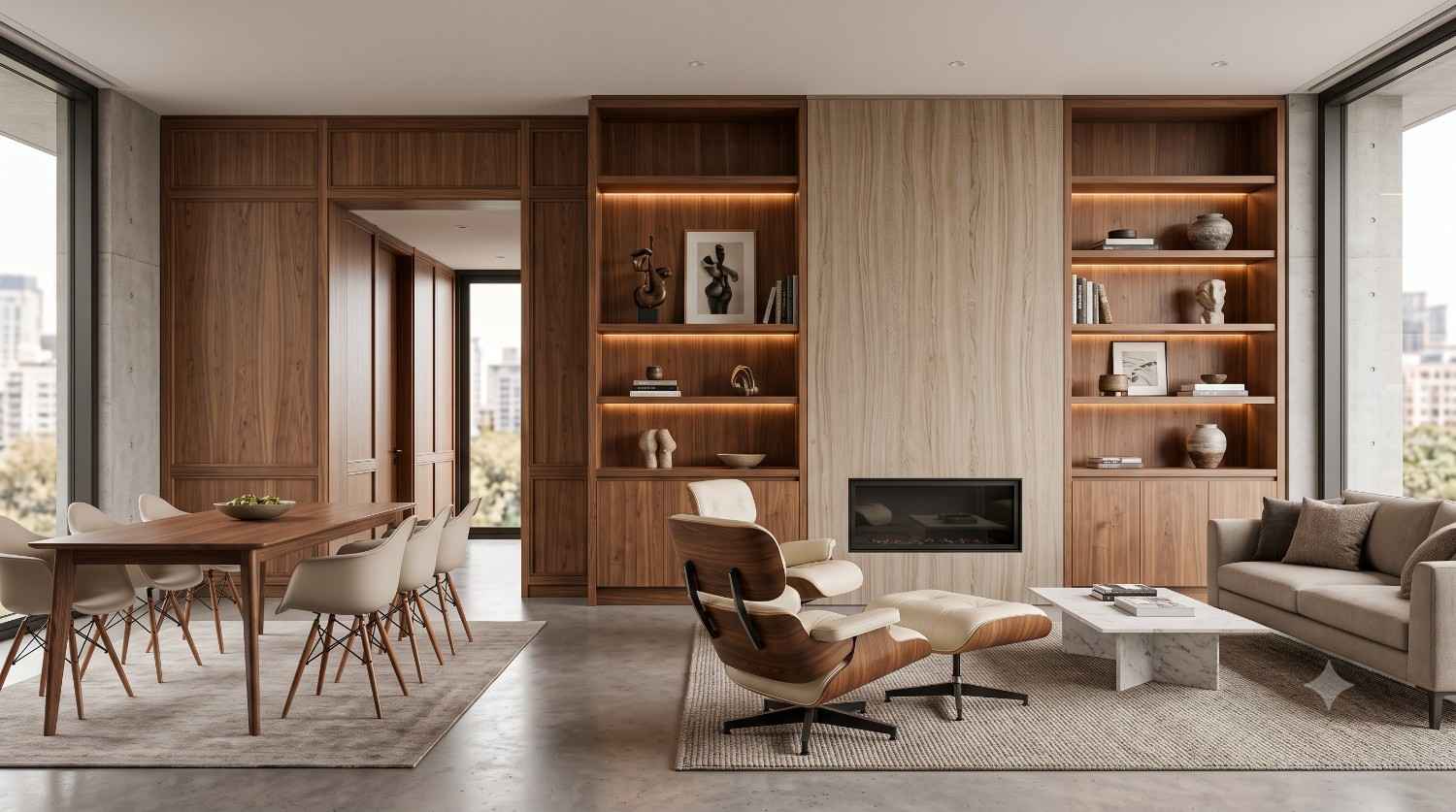
Although woodworking has long played a significant role in interior design, its uses extend far beyond the production of eye-catching furniture. A room’s appearance, feel, and functionality may all be influenced by high-quality woodwork, from tastefully designed cabinets to sophisticated wall panels. While bespoke designs enable homeowners to use available space, the natural grain of wood adds cosiness to contemporary rooms. Whether building a new house or remodelling an existing one, careful woodworking may provide interiors that are aesthetically pleasing, cosy, and well-organised.
Including Natural Heat In Living Areas
The capacity of wood to generate a pleasant environment is one of the biggest benefits of using it in interior design. Wood’s inherent grains, colours, and textures, in contrast to certain synthetic materials, offer each installation a unique look. A room’s overall appearance may be softened and made to seem more welcoming with even a basic wooden element.
Different interior designs may be complemented by wooden ceiling elements, ornamental wall panels, and timber flooring. While deeper treatments may provide depth and character, light-colored wood looks especially well in modern settings. A balanced interior is mostly dependent on the choice of wood, finish, and surrounding materials.
Optimising The Use Of Available Space
There is more to comfortable home design than just aesthetics. They also rely on how well the available space is used. Unusual room layouts, little storage, and poorly placed furniture may make daily tasks too challenging.
Opportunities to overcome these difficulties are offered by custom woodworking. Cabinetry, shelving, and storage options may be designed by skilled carpenters in Sydney to fit the specific measurements of each area. For instance, bespoke kitchen cabinets may make regularly used goods more accessible, while built-in closets can optimise bedroom storage.
Other techniques to increase utility without packing a space full include fitted bookshelves, window seating with hidden compartments, and under-staircase storage. These solutions save important floor space while assisting in the upkeep of an orderly atmosphere.
Developing A Unified Interior Design
There is often a feeling of continuity between rooms in a well-designed house. Consistent materials, finishes, and design elements may give the whole property a sense of unity even if each section may have a distinct function.
Coordinated doors, cabinets, shelves, and ornamental elements are examples of how high-quality woodwork adds to this uniformity. Without having every space seem the same, a recognisable design theme may be established by matching wood finishes across certain areas.
For example, cabinets in a nearby dining room may be complemented with a wooden kitchen island. In a similar vein, bedroom fixtures or hallway storage may include wood elements seen in living room furnishings. The residence is visually harmonious thanks to these subtle linkages.
Enhancing Daily Comfort With Careful Design
The comfort with which individuals utilise their living spaces may also be influenced by woodwork. Daily convenience is influenced by surface treatments, storage accessibility, and furniture size. Even while a gorgeously designed cabinet may seem remarkable, its worth may be restricted if its doors obstruct mobility or its shelves are hard to access.
During the design phase, thoughtful carpentry takes these useful elements into account. Custom desks and shelves may improve the comfort of home workplaces, and kitchen workstations can be set up to facilitate easy mobility.
Usability is further enhanced with smooth edges, well-fitting drawers, and sturdy cabinet hardware. Wooden installations become useful elements that assist daily activities when workmanship and practicality are given equal consideration.
Selecting Materials To Promote Long-Term Durability
The choice of materials, building techniques, and continuous upkeep all affect how long woodwork lasts. The strength, moisture resistance, and aesthetic appeal of various wood species and engineered wood products vary.
When chosen and maintained appropriately, solid wood may provide exceptional lifespan. For certain interior and cabinetry applications, engineered wood materials may provide useful substitutes. However, since moisture exposure is more prevalent in bathrooms, kitchens, and laundry rooms, selecting appropriate materials is especially crucial.
Wooden surfaces may be preserved with the use of protective coatings, precise installation, and suitable ventilation. Purchasing high-quality supplies and expert craftsmanship may help lessen the chance of needing repairs or replacements too soon.
Conclusion
Good woodwork combines long-lasting comfort, usefulness, and aesthetic appeal. Well-made wooden elements may change how interior rooms are perceived, from enhancing storage to adding natural textures and unique embellishments. Homeowners may design chic interiors that are practical and hospitable for many years to come by choosing appropriate materials, taking into account daily requirements, and placing a high value on expert workmanship.